Εμφάνιση αναρτήσεων με ετικέτα MISC. Εμφάνιση όλων των αναρτήσεων
Εμφάνιση αναρτήσεων με ετικέτα MISC. Εμφάνιση όλων των αναρτήσεων
7/1/08


2/12/06











7/10/06
quotes about prediction and statistics
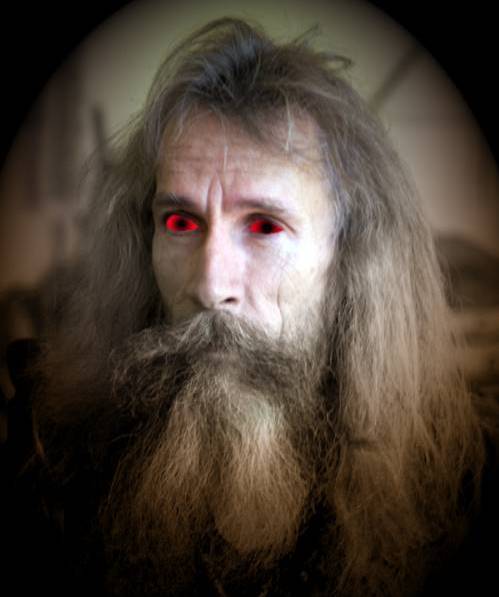
"The best qualification of a prophet is to have a good memory. "
--Marquis of Halifax,
This quote is very applicable to statistical models which require long periods of past data in order to be reliably estimated.
"Some things are so unexpected that no one is prepared for them. "
--Leo Rosten in Rome Wasn't Burned in a Day
This is particularly relevent to non-stationary processes such as the the climate and the business world. For example, the appearance of the Antarctic ozone hole in the mid 1970s was quite a surprise.
"An unsophisticated forecaster uses statistics as a drunken man uses lamp-posts - for support rather than for illumination. "
--After Andrew Lang
Careful application of statistics is essential for obtaining and judging predictions and can provide much insight into the assesment of skill in the predictions.
"An economist is an expert who will know tomorrow why the things he predicted yesterday didn't happen today. "
--Evan Esar
Post-analysis of predictions is often very revealing especially concerning model weaknesses.
--Evan Esar
Post-analysis of predictions is often very revealing especially concerning model weaknesses.
"Prediction is very difficult, especially if it's about the future."
--Nils Bohr, Nobel laureate in Physics
This quote serves as a warning of the importance of testing a forecasting model out-of-sample. It's often easy to find a model that fits the past data well--perhaps too well!--but quite another matter to find a model that correctly identifies those features of the past data which will be replicated in the future.
(Brexians lair)
18/9/06
Floating Ocean Windmills Designed to Generate More Power

By Ker ThanLiveScience Staff Writerposted: 18 September 200603:05 pm ET
Windmills that would float hundreds of miles out at sea could one day help satisfy our energy needs without being eyesores from land, scientists said today.
Offshore wind turbines are not new, but they typically stand on towers that have to be driven deep into the ocean floor. This arrangement only works in water depths of about 50 feet or less—close enough to shore that they are still visible.
Researchers at the Massachusetts Institute of Technology and the National Renewable Energy Laboratory (NREL) have designed a wind turbine that can be attached to a floating platform. Long steel cables would tether the corners of the floating platform to a concrete-block or other mooring system on the ocean floor, like a high-tech ship anchor. The setup is called a "tension leg platform," or TLP, and would be cheaper than fixed towers.
"You don't pay anything to be buoyant," said Paul Sclavounos, an MIT professor of mechanical engineering and naval architecture who was involved in the design.
The floating platforms to sway side to side but not bob up and down. Computer simulations suggest that even during hurricanes, the platforms would shift by only about three to six feet and that the bottom of the turbine blades would revolve well above the peak of even the highest wave. Dampers similar to those used to steady skyscrapers during high winds and earthquakes could be used to further reduce sideways motion, the researchers say.
Like the offshore windmills currently in use, the TLP's would use undersea cables to shuttle the electricity to land.
The researchers estimate their floater-mounted turbines could work in water depths ranging from about 100 to 650 feet. This means that in the northeastern United States, they could be placed about 30 to 100 miles out at sea. Because winds are stronger farther offshore, the floating windmills could also generate more energy—5.0 megawatts (MW), compared to 1.5 MW for onshore units and 3.5 MW for conventional offshore setups.
To save money, assembly of the TLP's could be done onshore—probably at a shipyard—and towed out to sea by a tugboat, the researchers say.
Sclavounos estimates that building and installing the TLP's should cost a third of what it costs to install current offshore tower windmills. Another advantage of using floating platforms is that the windmills could be moved around. If a company with 400 wind turbines in Boston needs more power in New York City, it can unhook some of their windmills and tow them south.
The researchers plan to install a half-scale prototype of their invention south of Cape Cod.
"We'd have a little unit sitting out there to show that this thing can float and behave the way we're saying it will," Sclavounos said.
MAY THE FORCE BE WITH YOU
8/9/06
A lovit?

Un chelner din Constanţa a declarat Poliţiei că "Mutu m-a bătut cu o rangă de fier"
Cotidianul Replica din Constanţa a publicat ieri o ştire conform căreia "Adrian Mutu ar fi lovit în cursul săptămînii trecute un angajat al unui restaurant din oraş".
Zvonul unui incident violent circulă de mai multe zile prin Constanţa, dar nimeni nu l-a putut confirma
După publicare, purtătorul de cuvînt al Poliţiei din oraş, Farmisia Fetcu, a declarat ieri că "în urma unor sesizări făcute de presă s-a demarat o anchetă. Am chemat presupusa victimă, în vîrstă de 30 de ani, la Poliţie. Această persoană a dat o declaraţie al cărui conţinut nu vi-l putem confirma sau infirma pentru că a refuzat repetat să depună plîngere penală". În declaraţie, constănţeanul a spus că a avut o altercaţie verbală cu Mutu şi că a fost agresat de el în hotelul «tricolorilor».
Presupusa persoană agresată se numeşte Gigi Grosu şi a fost chelner al restaurantului New Safari, unde "tricolorii" au mîncat marţi, 29 august, în perioada pregătirii meciului cu Bulgaria.
Aici apare o contradicţie. Pentru că Poliţia susţine că incidentul s-a petrecut joi, 31 august, dar masa a avut loc marţi
„M-a înjurat şi l-am făcut drogat”
Varianta victimei este următoarea, ea fiind reconstituită din declaraţii neoficiale şi din ceea ce a declarat în scris Poliţiei.
"I-am făcut poze la masă şi el m-a înjurat. Mi-a zis să-l las. Apoi i-am zis că e un drogat. Ne-am certat". Mutu şi chelnerul au ajuns în pragul violenţei fizice, dar nu s-au atins.
Dar lucrurile nu s-au oprit aici, susţine chelnerul. Cîţiva tipi au venit la el la restaurant. Arătau a interlopi. I-au spus că Mutu vrea să se împace cu el şi să-i dea un tricou. În declaraţie zice altceva, că s-a dus de bună voie la hotel.
"M-am dus la hotelul în care stăteau să mă împac cu el. Acolo am fost bătut cu o bară de fier de Mutu". Martori? Neoficial, el i-a amintit pe Contra, Marica şi Tamaş.
Chelnerul susţine că Mutu era băut în momentul în care l-a bătut şi că totul s-a petrecut după miezul nopţii
Între timp, Grosu nu mai e de găsit la restaurant. Cîţiva jurnalişti s-au întîlnit cu el, dar n-a vrut să facă declaraţii oficiale. De cîteva zile n-a fost prins decît pe telefonul mobil. Unele surse susţin că şi-a schimbat locul de muncă şi că a dat de înţeles, inclusiv poliţiştilor, că s-a împăcat cu Mutu. Nu a făcut plîngere penală.
Mutu nu a putut fi contactat ieri pentru a comenta acuzaţiile
(Brexians lair)
1/9/06

13/8/06


10/8/06

SAD ELF....WHY?
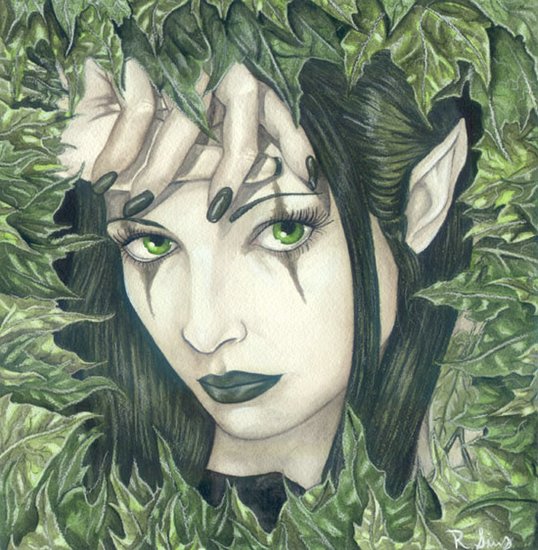
An elf is a mythical creature/creature of Germanic mythology/paganism which still survives in northern European folklore. In Norse mythology they were originally a race of minor gods of nature and fertility. Elves are often pictured as youthful-seeming men and women of great beauty living in forests and other natural places, underground, or in wells and springs. They have been portrayed to be long-lived or immortal and they have magical powers attributed to them.
Following the success of J.R.R. Tolkien's epic work based on ancient English culture The Lord of the Rings—wherein a wise, angelic people named elves play a significant role—they have become staple characters of modern fantasy.
Elf can be pluralized both as elves and elfs. Something associated with elves or the qualities of elves is described by the adjectives elven, elvish, elfin or elfish. A convention of modern fantasy usage is: the v in elven or elvish refers to human-sized elves (who correspond more closely to the mythology of the Viking Era), whereas the f in elfin or elfish refers to tiny-sized elfs (who correspond more closely to the folklore of the Renaissance and Romantic Eras). They are also called:
Germanic/Norse Countries:
Germany: Elfen, Elben and Alben
Great Britain: addler (obsolete)
Netherlands: Elfen, Alfen, Elven
Denmark: alfer, elvere, elverfolk, ellefolk or huldrer.
Iceland: álfar, álfafólk and huldufólk (hidden people)
Norway: alver, alfer or elvefolk
Sweden: alfer, alver or älvor
Other countries:
France: Elfe, Elfes
Brazil: Elfo, Elfos
Spain: Duende, Duendes; Elfo, Elfos
After much debate, the consensus is elf, álf and related words derive from the Proto-Indo-European root *albh meaning "white", whence also the Latin albus "white", whence Portuguese and English albino.
Likely, the ancient name refers to the "ghostly white apparations" of the elf-spirits: perhaps transparent.
MAY THE FORCE BE WITH YOU
Directed mutagenesis

Directed mutagenesis, also known as directed mutation, is a largely discredited hypothesis proposing that organisms can respond to environmental stresses through directing mutations to certain genes or areas of the genome.
The hypothesis was first proposed in 1988 by John Cairns, of Harvard University, who was studying Escherichia coli that lacked the ability to metabolize lactose. He grew these bacteria in media in which lactose was the only source of energy. In doing so, he found that the rate at which the bacteria evolved the ability to metabolize lactose was many orders of magnitude higher than would be expected if the mutations were truly random. This inspired him to propose that the mutations that had occurred had been directed at those genes involved in lactose utilization.
Later support for this hypothesis came from Susan Rosenberg, then at the University of Alberta, who found that an enzyme involved in DNA recombinational repair, recBCD, was necessary for the directed mutagenesis observed by Cairns and colleagues in 1989.
However, the directed mutagenesis hypothesis was essentially disproved in 2002, when John Roth and colleagues showed that the phenomenon was due to general hypermutability due to selected gene amplification, and was thus a "standard Darwinian process."

may the force be with you
8/8/06
TERATOGENESIS

Teratogenesis is a medical term from the Greek, literally meaning monster-making, which derives from teratology, the study of the frequency, causation, and development of congenital malformations—misleadingly called birth defects. These include gross morphological abnormalities, such as cleft lip and/or palate, anencephaly, or ventricular septal defect, but may also include phenomenae such as increased risk of cervical cancer or discoloration of tooth enamel. These malformations can arise from genetic abnormalities of the fetus, from adverse environmental circumstances (termed teratogens or tetragens), or, frequently, from an unlucky combination of these factors. Teratogenesis has gained a more specific usage for the development of abnormal cell masses during fetal growth (see pregnancy), causing physical defects in the fetus. The study of teratogenesis is called teratology. 
MAY THE FORCE BE WITH YOU
1/8/06
Illuminati

The name assumed by the members of a secret society founded by Adam Weishaupt in 1776.
HISTORY
Weishaupt was born of Westphalian parents at Ingolstadt (Bavaria), on 6 February, 1748, and lost his father in 1753. Although educated at a Jesuit school, he fell early under the influence of his free-thinking godfather, the director of the high-school of Ickstatt, to whom he owed his appointment as professor of civil law at the University of Ingolstadt in 1772. He was the first layman to occupy the chair of canon law at this university (1773), but, in consequence of the growing rationalistic influence which he exerted over the students both in his academic capacity and in his personal intercourse with them, he came into ever sharper collision with the loyal adherents of the Church and with those who were influential in government circles. As, furthermore, his obstinate nature led him to quarrel with almost everyone with whom his intercourse was at all prolonged, he felt the need of a powerful secret organization to support him in the conflict with his adversaries and in the execution of his rationalistic schemes along ecclesiastical and political lines. At first (1774) he aimed at an arrangement with the Freemasons. Closer inquiry, however, destroyed his high estimate of this organization, and he resolved to found a new society which, surrounded with the greatest possible secrecy, would enable him most effectually to realize his aims and could at all times be precisely adapted to the needs of the age and local conditions.
His order was to be based entirely on human nature and observation; hence its degrees, ceremonies, and statutes were to be developed only gradually; then, in the light of experience and wider knowledge, and with the co-operation of all the members, they were to be steadily improved. For his prototype he relied mainly on Freemasonry, in accordance with which he modelled the degrees and ceremonial of his order. After the pattern of the Society of Jesus, though distorting to the point of caricature its essential features, he built up the strictly hierarchical organization of his society. "To utilize for good purposes the very means which that order employed for evil ends", such was, according to Philo (Endl. Erkl., 60 sq.), "his pet design". For the realization of his plans, he regarded as essential the "despotism of superiors" an the "blind, unconditional obedience of subordinates" (ibid.), along with the utmost secrecy and mysteriousness. At the beginning of 1777 he entered a Masonic Lodge and endeavoured, with other members of the order, to render Freemasonry as subservient as possible to his aims. As Weishaupt, however, despite all his activity as an agitator and the theoretic shrewdness he displayed, was at bottom only an unpractical bookworm, without the necessary experience of the world, his order for a long time made no headway. The accession to it, in 1780, of the Masonic agent Freiherr von Knigge (Philo), a man of wide experience and well known everywhere in Masonic circles, gave matters a decisive turn. In company with Weishaupt, who, as a philosopher and jurist, evolved the ideas and main lines of the constitution, Knigge began to elaborate rapidly the necessary degrees and statutes (until 1780 the Minerval degree was the only one in use), and at the same time worked vigorously to extend the order, for which within two years he secured 500 members. When the great international convention of Freemasons was held at Wilhelmsbad (16 July to 29 August, 1782) the "Illuminated Freemasonry", which Knigge and Weishaupt now proclaimed to be the only "pure" Freemasonry, had already gained such a reputation that almost all the members of the convention clamoured for admission into the new institution. Particularly valuable for the order was the accession of Bode (Amelius), who commanded the highest respect in all Masonic circles. Assisted by Bode, Knigge laboured diligently to convert the whole Masonic body into "Illuminated Freemasons". A number of the most prominent representatives of Freemasonry and "enlightenment" became Illuminati, including, in 1783, Duke Ferdinand of Brunswick, the foremost leader of European Freemasonry and the princely representative of the illuminism of his age. Other famous members were Goethe, Herder, and Nicolai. The order was also propagated in Sweden, Russia, Poland, Denmark, Hungary, Austria, and France. But in 1783 dissensions arose between Knigge and Weishaupt, which resulted in the final withdrawal of the former on 1 July, 1784. Knigge could no longer endure Weishaupt's pedantic domineering, which frequently assumed offensive forms. He accused Weishaupt of "Jesuitism", and suspected him of being "a Jesuit in disguise" (Nachtr., I, 129). "And was I", he adds, "to labour under his banner for mankind, to lead men under the yoke of so stiff-necked a fellow?--Never!"
Moreover, in 1783 the anarchistic tendencies of the order provoked public denunciations which led, in 1784, to interference on the part of the Bavarian Government. As the activity of the Illuminati still continued, four successive enactments were issued against them (22 June, 1784; 2 March, and 16 August, 1785; and 16 August, 1787), in the last of which recruiting for the order was forbidden under penalty of death. These measures put an end to the corporate existence of the order in Bavaria, and, as a result of the publication, in 1786, of its degrees and of other documents concerning it--for the most part of a rather compromising nature--its further extension outside Bavaria became impossible. The spread of the spirit of the Illuminati, which coincided substantially with the general teachings of the "enlightenment", especially that of France, was rather accelerated than retarded by the persecution in Bavaria. In two letters addressed to the Bishop of Freising (18 June and 12 November, 1785) Pius VI had also condemned the order. As early as 16 February, 1785, Weishaupt had fled from Ingolstadt, and in 1787 he settled at Gotha. His numerous apologetic writings failed to exonerate either the order or himself. Being now the head of a numerous family, his views on religious and political matters grew more sober. After 1787 he renounced all active connexion with secret societies, and again drew near to the Church, displaying remarkable zeal in the building of the Catholic church at Gotha. he died on 18 November, 1830, "reconciled with the Catholic Church, which, as a youthful professor, he had doomed to death and destruction"--as the chronicle of the Catholic parish in Gotha relates.
OBJECTS AND ORGANIZATION
As exhibiting the objects and methods of the order, those documents are authoritative which are given in the first and second sections of works in the bibliography. The subsequent modifications of the system, announced by Weishaupt in his writings after 1785, are irrelevant, since the order had spread far and wide before these modifications were published. The above-named documents reveal as the real object of the Illuminati the elaboration and propagation of a new popular religion and, in the domain of politics, the gradual establishment of a universal democratic republic. In this society of the future everything, according to Weishaupt, was to be regulated by reason. By "enlightenment" men were to be liberated from their silly prejudices, to become "mature" or "moral", and thus to outgrow the religious and political tutelage of Church and State, of "priest and prince". Morals was the science which makes man "mature", and renders him conscious of his dignity, his destiny, and his power. The principal means for effecting the "redemption" was found in unification, and this was to be brought about by "secret schools of wisdom". These "schools", he declares, "were always the archives of nature and of the rights of man; through their agency, man will recover from his fall; princes and nations, without violence to force them, will vanish from the earth; the human race will become one family, and the world the habitation of rational beings. Moral science alone will effect these reforms `imperceptibly'; every father will become, like Abraham and the patriarchs, the priest and absolute lord of his household, and reason will be man's only code of law" ("Nachtr.", p. 80 sq.; repeated verbatim in Knigge, "Die neuesten Arbeiten", p. 38). This redemption of mankind by the restoration of the original "freedom and equality" through "illumination" and universal charity, fraternity, and tolerance, is likewise the true esoteric doctrine of Christ and his Apostles. Those in whom the "illuminating" grace of Christ is operative (cf. Heb., vi, 4) are the "Illuminati". The object of pure (i. e. illuminated) Freemasonry is none other than the propagation of the "enlightenment" whereby the seed of a new world will be so widely scattered that no efforts at extirpation, however violent, will avail to prevent the harvest ("Nachtr.", pp. 44, 118; "Die neuesten Arb.", pp. 11, 70). Weishaupt later declared (Nachtrag zu meiner Rechtfertigung, 77 sqq., 112 sqq.) that Masonry was the school from which "these ideas" emanated.
These objects of the order were to be revealed to members only after their promotion to the "priestly" degree (Nachtr., I, 68). The preliminary degrees were to serve for the selection, preparation, and concealment of the true "Illuminati"; the others were to open the way for the free religion and social organization of the future, in which all distinction of nations, creeds, etc., would disappear. The government of the order was administered by the superiors of the Minerval "churches", "provincials", "nationals", and "areopagites" (who constituted the supreme council), under the direction of Weishaupt as general of the order. Members were acquainted only with their immediate superiors, and only a few trusted members knew that Weishaupt was the founder and supreme head of the order. All the members were obliged to give themselves a training in accordance with the aims of the society, and to make themselves useful, while the order, on its part, pledged itself to further their interests by the most effectual means. They were especially recommended to systematically observe persons and events, to acquire knowledge, and to pursue scientific research in so far as it might serve the purposes of the order. Concerning all persons with whom they had intercourse they were to gather information, and on all matters which could possibly affect either themselves or the order they were to hand in sealed reports; these were opened by superiors unknown to the writers, and were, in substance, referred to the general. The purpose of this and other regulations was to enable the order to attain its object by securing for it a controlling influence in all directions, and especially by pressing culture and enlightenment into its service. All illuministic and official organs, the press, schools, seminaries, cathedral chapters (hence, too, all appointments to sees, pulpits, and chairs) were to be brought as far as possible under the influence of the organization, and princes themselves were to be surrounded by a legion of enlightened men, in order not only to disarm their opposition, but also to compel their energetic co-operation. A complete transformation would thus be effected; public opinion would be controlled; "priests and princes" would find their hands tied; the marplots who ventured to interfere would repent their temerity; and the order would become an object of dread to all its enemies.
Concerning the influence actually exerted by the Illuminati, the statements of ex-Freemasons--L. A. Hossman, J. A. Starck, J. Robinson, the Abbé Barruel, etc.--must be accepted with reserve, when they ascribe to the order a leading rôle in the outbreak and progress of the French Revolution of 1789. Their presentation of facts is often erroneous, their inferences are untenable, and their theses not only lack proof, but, in view of our present knowledge of the French Revolution (cf., e. g., Aulard, "Hist. pol. de la Rév. Franç.", 3rd ed., 1905; Lavisse-Rambaud, "Hist. générale", VIII, 1896), they are extremely improbable. On the other hand, once it had discarded, after 1786, the peculiarities of Weishaupt, "Illuminationism" was simply the carrying out of the principles of "enlightenment"; in other words, it was Freemasonry and practical Liberalism adapted to the requirements of the age; as such it exerted an important influence on the intellectual and social development of the nineteenth century. (See MASONRY; SECRET SOCIETIES.)
The documents, unquestionably genuine, that originated within the order and were published by the Bavarian government: Einige Originalschr. des Ill. Ordens (confiscated from Zwack) (Munich, 1787); with Nachtrag (seized from Baron Bassus) (in 2 parts, 1787); also documents made public through other agencies and recognized as genuine by Knigge and Weishaupt: Der echte Illuminat (Edessa, 1788); Illuminatus dirigens oder schottischer Ritter (1794); SPARTACUS AND PHILO (KNIGGE), Die neuesten Arbeiten (1794); PHILO, Endliche Erklärung (1788).
Declarations by members who left the order: COSANDEY, RENNER, AND GRÜNBERGER, Drei merkwürdige Aussagen (1786); IDEM (with UTZSCHNEIDER), Grosse Absichten des Ill. Ordens, with three appendices (1786).
In defence of the order: WEISHAUPT Apologie der Illuminaten (Frankfort and Leipzig, 1787); IDEM, Vollständige Gessch. d. Verfolgung der Illuminaten in Bayern (Frankfort and Leipzig, 1786); IDEM, Pythagoras, oder Betrachtungen über die geheime Welt- and Regierungskunst (1790).
Against the order or otherwise concerning it: STATTLER (Weishaupt's colleague at Ingolstadt), Das Geheimniss der Bosheit des Stifters des Ill. Ordens (1787); PRESTON, Illustrations of Freemasonry (1856); MOUNIER, De l'influence attribuée aux Philosophes, aux Franc-maçons et aux Illuminés sur la révolution Française (1822); JARCKE, Vermischte Schriften, II (1839); DESCHAMPS-JANET, La société et les sociétés, II (3rd ed., 1880), 93 sqq., 115 sqq.; III (1883), 34 sqq.; WOLFRAM, Die Illuminaten in Bayern u. ihre Verfolgung (1899-1900); ENGEL, Gesch. des Ill. Ordens (1906) (rich in documents, but favourable to Weishaupt); Hist-polit. Blätter (1889), I, 926-41 (official list of Illuminati).
HERM. GRUBER Transcribed by Thomas J. Bress
may the force be with you
26/7/06
Femme Fatale

Of the three types of noir women, the femme fatale represents the most direct attack on traditional womanhood and the nuclear family. She refuses to play the role of devoted wife and loving mother that mainstream society prescribes for women. She finds marriage to be confining, loveless, sexless, and dull, and she uses all of her cunning and sexual attractiveness to gain her independence. As Janey Place points out, "She is not often won over and pacified by love for the hero, as is the strong heroine of the forties who is significantly less sexual than the film noir woman."
example
She remains fiercely independent even when faced with her own destruction. And in spite of her inevitable death, she leaves behind the image of a strong, exciting, and unrepentant woman who defies the control of men and rejects the institution of the family.
MAY THE FORCE BE WITH YOU
21/7/06
Τιμή στο σπουδαίο ζωγράφο

Πλήθος εκδηλώσεων στην Ολλανδία για τα 400 χρόνια από τη γέννηση του Ρέμπραντ
Τα 400 χρόνια από τη γέννηση του Ρέμπραντ τιμούν οι πολίτες της Ολλανδίας με πλήθος εκδηλώσεων κυρίως στο Αμστερνταμ και το Λάιντεν, όπου έζησε. Το βράδυ του Σαββάτου αναμένεται και η πρεμιέρα του μιούζικαλ με θέμα τη ζωή του σπουδαίου ζωγράφου.
Το μιούζικαλ ανεβαίνει στο Βασιλικό Θέατρο του Αμστερνταμ και δίνει μια διαφορετική περισσότερο «προσωπική» ματιά στη ζωή ενός από τους σπουδαιότερους ζωγράφους της Ολλανδίας.
Στο Λάιντεν διοργανώνεται ειδικό φεστιβάλ με μουσική, θεατρικές παραστάσεις και άφθονο φαγητό και ποτό, όπως ακριβώς σερβιρίζονταν τον 17ο αιώνα.
Ο Ρέμπραντ γεννήθηκε στις 15 Ιουλίου 1606 και πέθανε στις 4 Οκτωβρίου 1669. Έζησε και δημιούργησε στο λεγόμενο «Χρυσό Αιώνα της Ολλανδίας», μια περίοδο που η χώρα γνώρισε εξαιρετική ανάπτυξη και ακμή στις τέχνες, την οικονομία και το εμπόριο.
Σε όλη τη διάρκεια της ζωής του δημιούργησε πάνω από 600 ελαιογραφίες, 300 χαρακτικά και 2.000 σχέδια. Πολύ γνωστές και οι αυτοπροσωπογραφίες του.
Ο ίδιος έλεγε για το έργο του: «Προσπαθώ να πετύχω τη μεγαλύτερη και περισσότερο φυσική κίνηση».
news.in.gr
19/7/06
Ρητορική της σωματικής έκφρασης-body language
Παραδείγματα σωματικής έκφρασης
Brisk, erect walk/ευθητενες περπατημα = Confidence, εμπιστοσύνη
Standing with hands on hips/σταση με τα χερια στους γοφους = Readiness, aggression, έτοιμος για επίθεση ή άμυνα
Sitting with legs crossed, foot kicking slightly/καθισμα με τα ποδια σταυρωμενα = Boredom, βαριεστιμάρα
Sitting, legs apart/καθισμα με τα ποδια ανοιχτα = Open, relaxed, ανοικτός, άνετος
Arms crossed on chest/σταυρωμενα χερια στο στηθος = Defensiveness, άμυνα
Walking with hands in pockets, shoulders hunched/περπατημα με τα χερια στις τσεπες/γυρτοι ωμοι = Dejection, απόρριψη
Hand to cheek/το χερι στα μαγουλα = Evaluation, thinking, υπολογισμός, σκεπτικός
Touching, slightly rubbing nose/επαφη και τριψιμο μυτης = Rejection, doubt, lying, αμφιβολία, ψέμα μη αποδοχη
Rubbing the eye/τριψιμο ματιου = Doubt, disbelief, αμφιβολία, καχυποψία
Hands clasped behind back/τα χερια πισω απο την μεση = Anger, frustration, apprehension, θυμός, ανησυχία
Locked ankles/ενωμενοι αστραγαλοι = Apprehension, ανησυχία
Head resting in hand, eyes downcast/το κεφαλι να στηριζεται στα χερια, βλεμμα προς τα κατω = Boredom, βαριεστιμάρα
Rubbing hands/τριψιμο χεριών= Anticipation, αναμονή
Sitting with hands clasped behind head, legs crossed/Τα χερια ενωμενα πισω απο το κεφαλι,σταυρωμενα ποδια = Confidence, superiority, αίσθηση εμπιστοσύνης, ανωτερότητας
Open palm/ανοιχτες παλαμες = Sincerity, openness, innocence, ειλικρίνεια, άνεση
Pinching bridge of nose, eyes closed/πιασιμο της μυτης αναμεσα απο τα φρυδια/κλειστα ματια = Negative evaluation, αρνητική αξιολόγηση
Tapping or drumming fingers κτυπημα η παιξιμο με τα δαχτυλα = Impatience, ανυπομονησία
Steepling fingers/ενωση δαχτυλων= Authoritative, επιβολή
Patting/fondling hair/παιξιμο με τα μαλλια = Lack of self-confidence; insecurity, απουσία εμπιστοσύνης στον εαυτό, ανασφάλεια
Tilted head/κλιση κεφαλιου = Interest, ενδιαφέρον
Stroking chin/χτυπημα στο σαγωνι = Trying to make a decision, προσπαθώντας να πάρει απόφαση
Looking down, face turned away /κοιταγμα κατω/αποστροφη = Disbelief, έλλειψη εμπιστοσύνης
Biting nails /χτυπημα νυχιων= Insecurity, nervousness, ανασφάλεια, νευρικότητα
Pulling or tugging at ear/τραβηγμα η τριψιμο αυτιου = Indecision, αναποφασιστικότητα
Εγγραφή σε:
Αναρτήσεις (Atom)





,+)
+an+onshore+wind+turbine,+a%0d%0aconventional+offshore+unit,+and+the+experimental+unit+used+in+MIT)